NASA Artemis Rocket Launch 2026: Helium Issue Delays Historic Moon Mission But April Window Still Alive
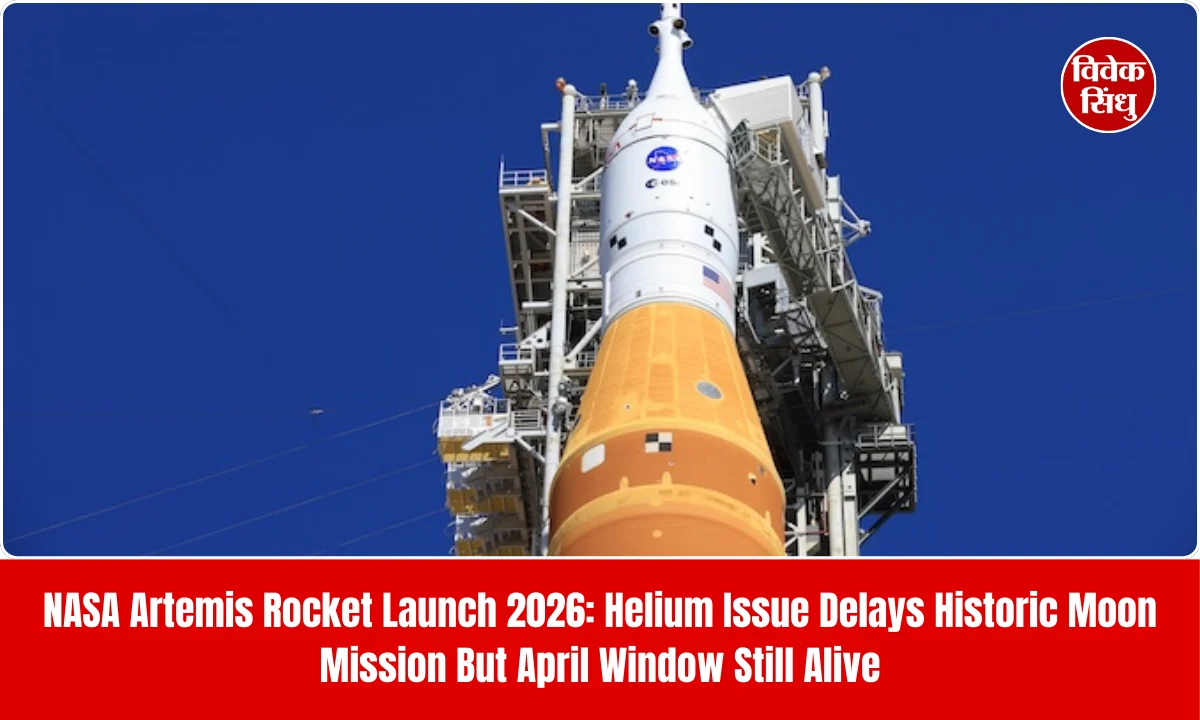
NASA Artemis Rocket Launch 2026 Helium Issue Delays Historic Moon Mission But April Window Still Alive
The NASA Artemis rocket launch is once again making headlines. If you were searching for Artemis II launch date or NASA SLS rocket problem, you are not alone. The mission was targeting March 6, 2026. Now that window is officially off the table after engineers detected an interrupted helium flow in the Space Launch System upper stage.
Still, the bigger story is not just the delay. It is the return of humans to deep space after more than 50 years. Artemis II is set to become the first crewed lunar flyby since the Apollo era. The excitement is real. The frustration is also real. But safety remains NASA’s top priority.
Key Takeaways
- Artemis II will be the first crewed lunar flyby in over 50 years
- Helium flow interruption in the SLS upper stage ruled out the March 2026 launch window
- NASA is preparing to roll the rocket back to the Vehicle Assembly Building for troubleshooting
- Earliest possible new launch window is early April 2026
- Crew includes Reid Wiseman, Victor Glover, Christina Koch, and Jeremy Hansen
- Mission duration is around 10 days with a deep space lunar flyby
- Public sentiment shows excitement mixed with delay fatigue but strong support for safety
Why Artemis II Is Such A Big Deal?
NASA is not just launching another rocket. Artemis II is part of the larger Artemis program that aims to return humans to the Moon and build a long term presence. This mission will use the powerful Artemis II profile. It will send four astronauts around the Moon and back without landing.
The rocket behind this mission is the Space Launch System, also called SLS. On top of it sits the Orion spacecraft. Together, they form the backbone of NASA’s deep space ambitions.
This mission matters because it bridges the gap between uncrewed testing and an actual lunar landing planned under Artemis III. If Artemis II goes well, the path toward astronauts walking on the Moon again becomes much clearer.
What Exactly Went Wrong With The Helium Flow
Overnight on February 21, engineers detected an interrupted helium flow in the Interim Cryogenic Propulsion Stage. That might sound technical, but here is why it matters.
Helium plays a critical role in rocket operations:
- It helps pressurize propellant tanks
- It supports engine purging
- It maintains proper environmental conditions for engine performance
Without stable helium flow, the upper stage cannot function safely. NASA Administrator Jared Isaacman confirmed that this issue would almost certainly impact the March launch window.
Interestingly, a similar issue signature appeared during Artemis I. Corrective actions were applied after that mission. Now engineers are investigating whether a filter, valve, quick disconnect umbilical, or check valve is responsible this time.
To properly inspect and repair the system, the rocket may be rolled back to the Vehicle Assembly Building at Kennedy Space Center. That environment allows safer troubleshooting compared to the launch pad.
Artemis II Launch Windows Comparison
Here is a quick look at how the schedule has shifted:
| Launch Window | Status | Notes |
|---|---|---|
| March 6 to March 11, 2026 | Ruled Out | Helium flow interruption |
| Early April 2026 | Possible | Dependent on rollback and repair timeline |
| Late April 2026 | Backup Option | Preserved if repairs go smoothly |
NASA is now focusing on preserving the April window if engineering reviews support it.
Meet The Artemis II Crew
One of the reasons this mission is trending heavily on X is the crew itself. The lineup reflects both experience and diversity.
- Reid Wiseman
- Victor Glover
- Christina Koch
- Jeremy Hansen
This will be the first time a Canadian astronaut flies around the Moon. The international collaboration aspect has received strong positive reactions online. Many users highlighted how this mission represents a global step forward, not just a national milestone.
Wet Dress Rehearsal Success Before The Setback
Just days before the helium issue surfaced, NASA successfully completed a wet dress rehearsal on February 19, 2026. This included full fueling of both SLS stages and countdown simulation.
Earlier in February, a liquid hydrogen leak had cut short a previous rehearsal. That issue was addressed, and the second attempt went smoothly. So when NASA announced March 6 as a target, expectations were rising fast.
Then came the helium interruption.
This shows how spaceflight works in 2026. Testing is layered. Reviews are constant. If something looks even slightly off, teams pause. Some people compare this to the Apollo era. Back then timelines were aggressive. Today, risk standards are far stricter.
Artemis Program And The Bigger Picture
Artemis II is not a standalone event. It is part of a long roadmap.
Here is how the Artemis timeline looks:
| Mission | Type | Objective |
|---|---|---|
| Artemis I | Uncrewed | Test SLS and Orion systems |
| Artemis II | Crewed Flyby | Deep space systems validation |
| Artemis III | Crewed Landing | Return humans to lunar surface |
Beyond Artemis III, NASA aims for sustained lunar presence. That includes potential surface habitats and preparation for Mars missions.
There is also a geopolitical angle. China is targeting a crewed Moon mission by 2030. Many analysts see Artemis as a symbol of renewed US space leadership. That narrative is driving public interest as much as the engineering itself.
What Happens Next
NASA engineers are reviewing telemetry data. If rollback to the Vehicle Assembly Building happens, inspections and component replacements will follow.
The key factors that will determine the next launch date:
- Root cause confirmation of helium interruption
- Repair timeline
- Weather constraints
- Scheduling within April launch windows
A detailed briefing is expected soon. Until then, early April remains the most realistic scenario.
Final Thoughts
Yes, the NASA Artemis rocket launch has hit another delay. That part is true. But the bigger picture shows a methodical approach to safety and deep space exploration.
Artemis II is more than a single launch date. It is a stepping stone toward a sustained human presence on the Moon. Public opinion may swing between hype and frustration. Still, the admiration for the engineering ambition remains strong.
If April holds, we could soon witness the first crewed lunar flyby in over five decades. And this time, the goal is not just to visit the Moon. The goal is to stay.
Related Posts :

Share This Post